Wildly Good Pairings
Wildly Good Pairings
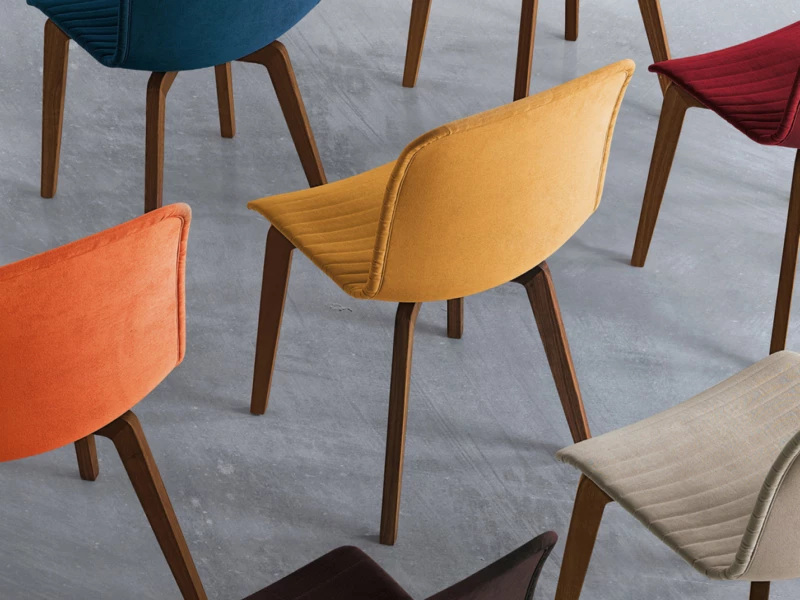
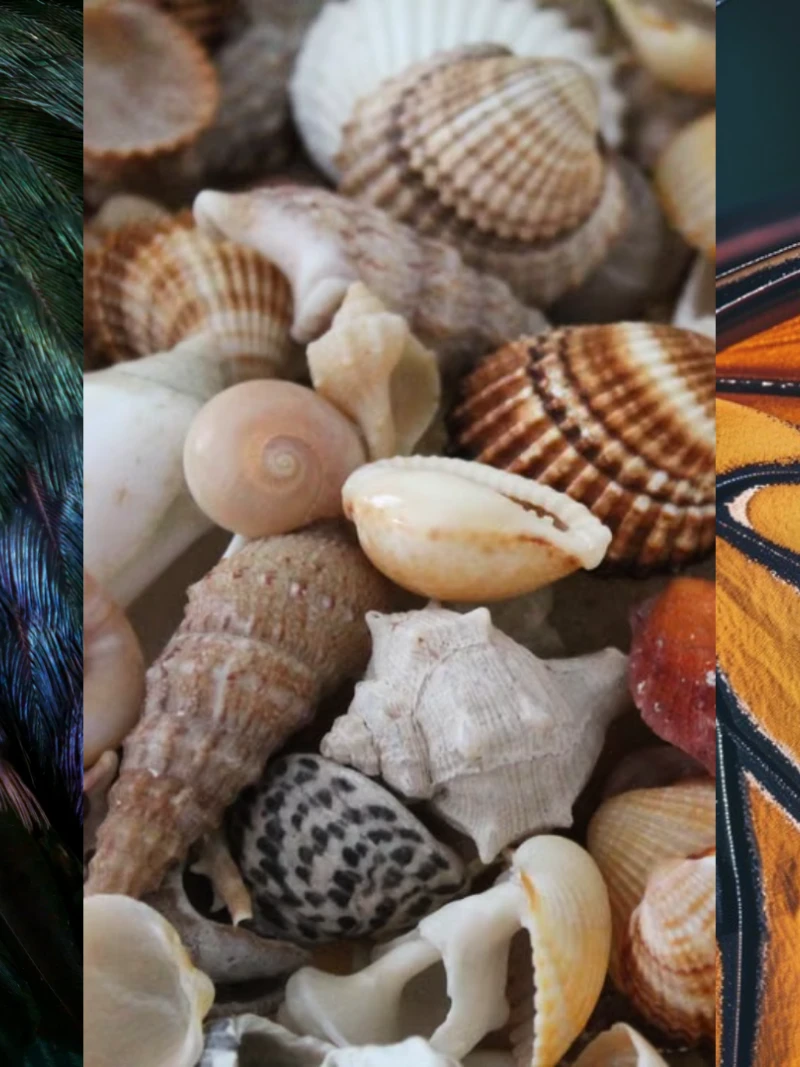
Some colour combinations just seem to make sense, even when they aren’t combinations we would necessarily think to put together ourselves.
Read more
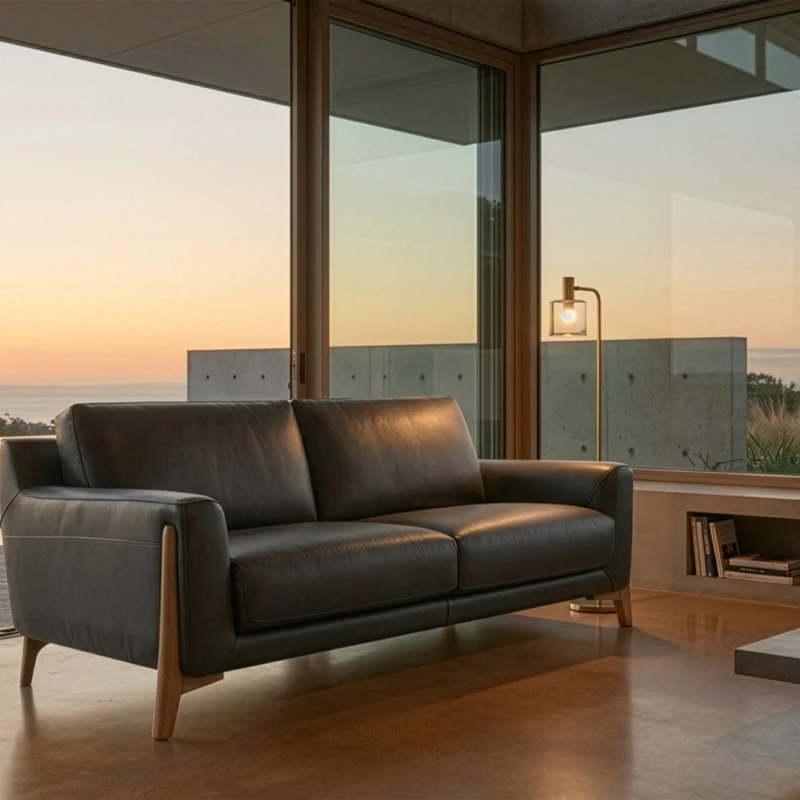
Leather furniture tends to provoke a strong reaction, with some people picturing a beautifully worn sofa that only becomes better with age, while others immediately think of shiny lounge suites, cold legs and being warned not to sit down with a drink. Modern leather furniture, however, is softer, more relaxed and considerably more versatile than its reputation suggests, with finishes suited to busy family homes, quieter households, devoted pet owners and people who would rather not spend their weekends fussing over the sofa.
Before placing leather firmly in the “not for me” category, let’s clear up a few things.
Leather may feel cool when you first sit down during winter, but it warms as you settle in, so by the time you have found the remote, rearranged the cushions and decided what to watch, the initial chill is usually long forgotten.
During warmer months, many genuine leathers are more breathable than synthetic alternatives, although no sofa performs particularly well when left baking in strong afternoon sun. Keeping leather away from direct heat and prolonged sunlight will help preserve its colour, condition and finish over time.
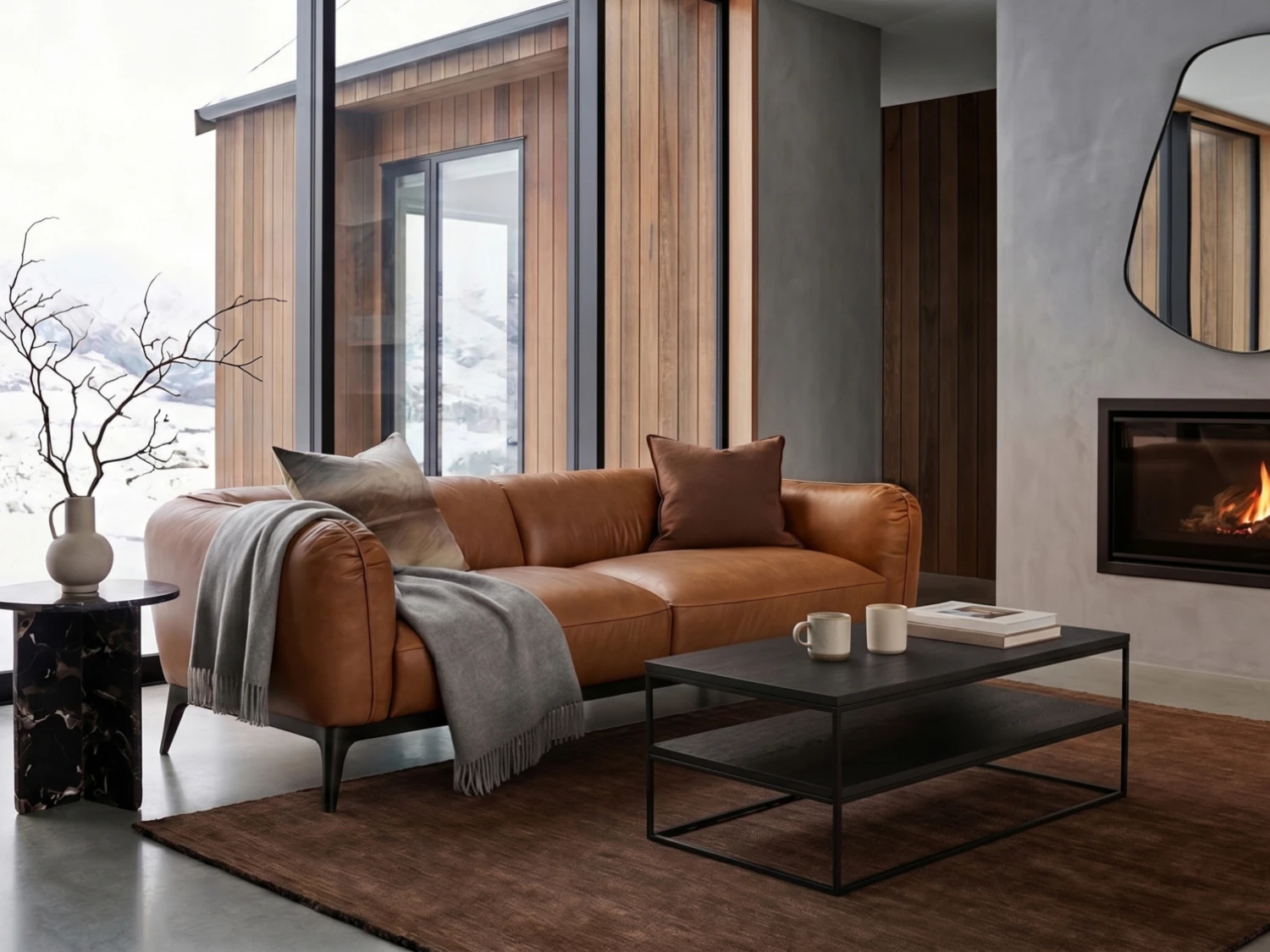
Leather’s reputation for being demanding may have more to do with old household rules than with the material itself, particularly when many protected finishes require little more than regular dusting and an occasional wipe with a soft, slightly damp cloth.
Spills should be blotted promptly rather than scrubbed, which is sensible advice for almost any upholstered furniture, while the amount of ongoing care will depend largely on the finish you choose. A soft, minimally treated leather may require a little more consideration. In contrast, a protected finish is designed to withstand regular use, everyday mess, and the occasional lapse in table manners.
Because there is no single care routine that applies to every leather, it helps to understand what you are buying before the sofa arrives, rather than after someone introduces it to a glass of red wine.
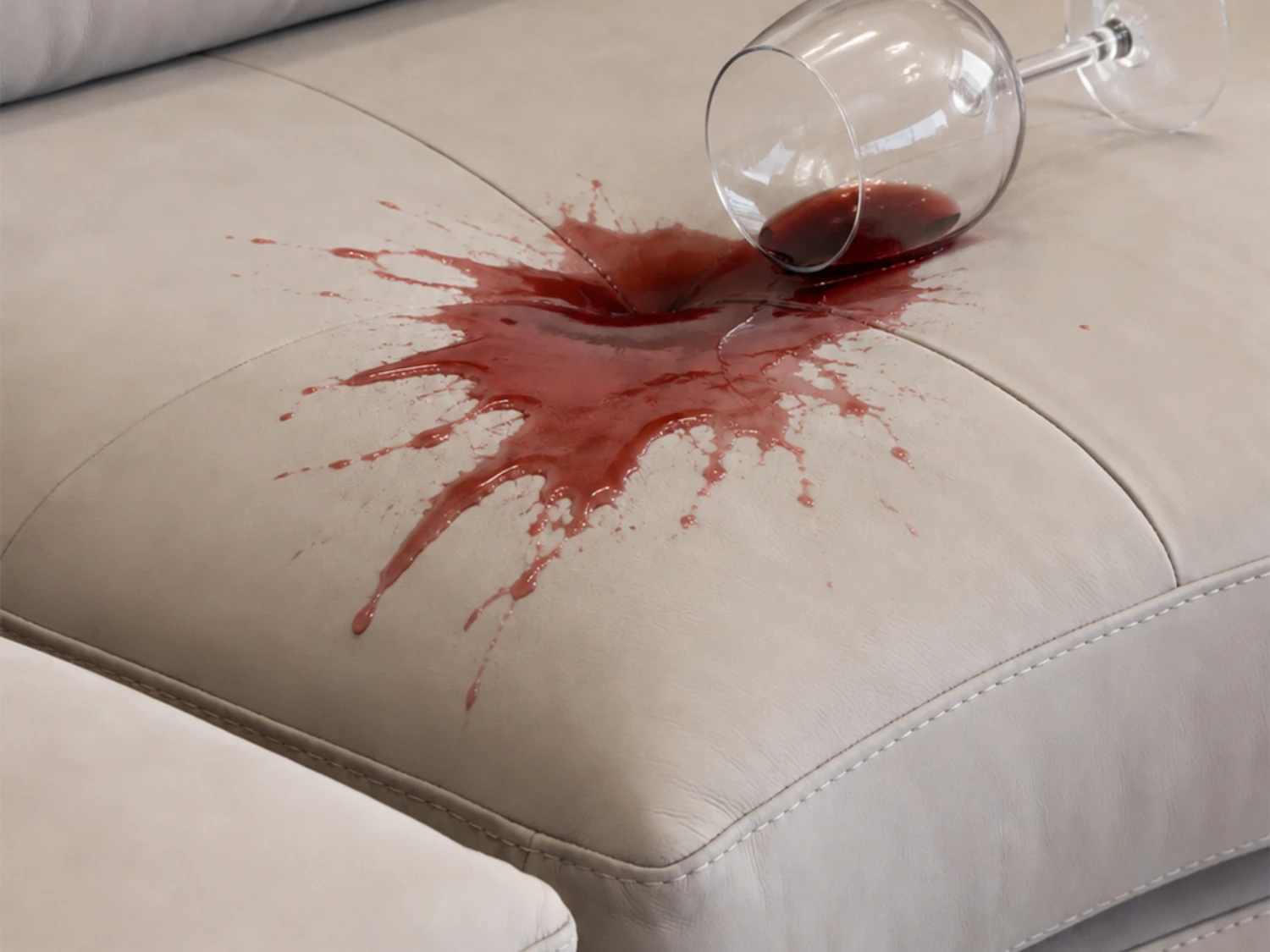
On many protected leathers, a prompt blot with a soft cloth is often all it takes.
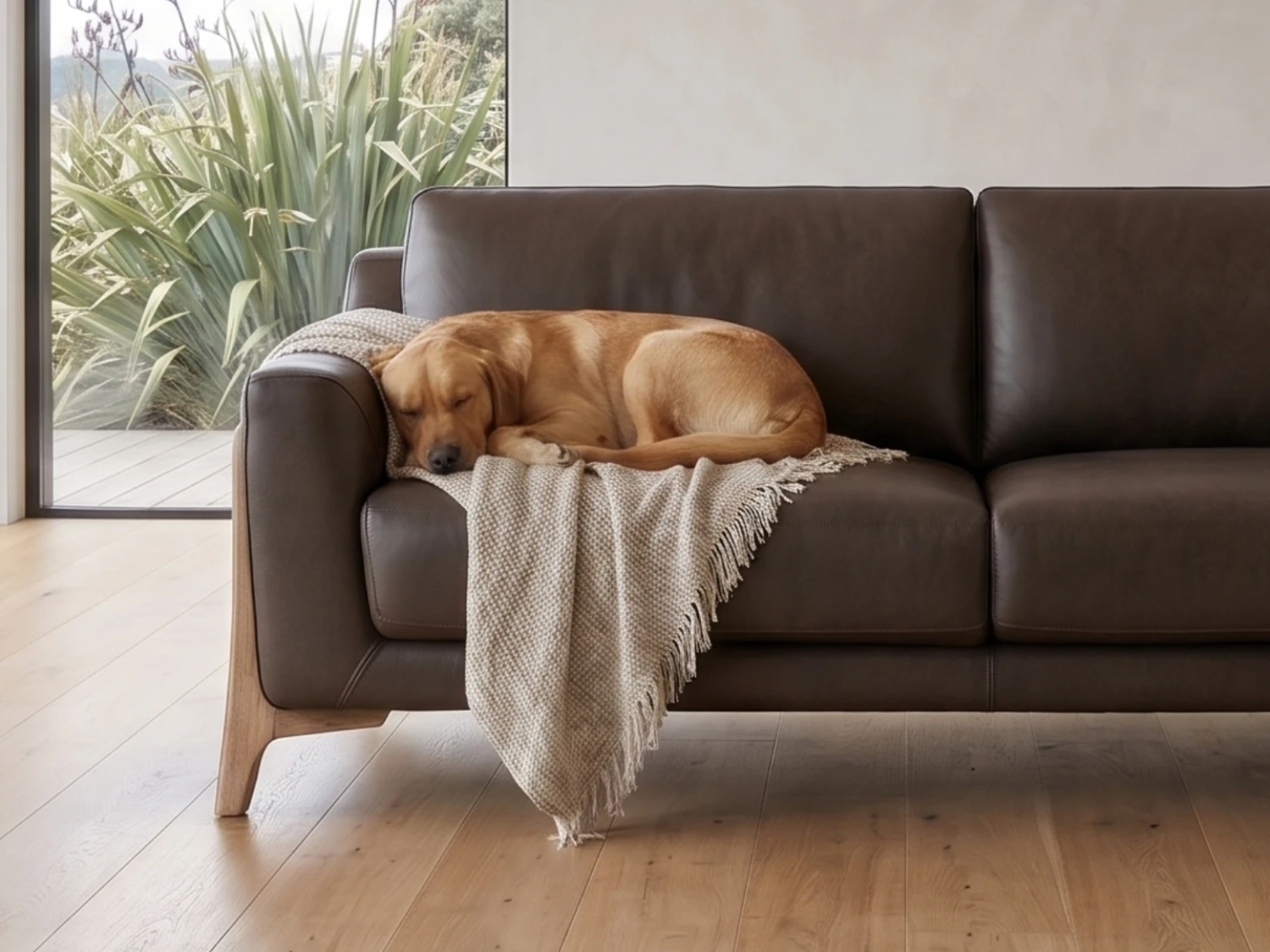
Children, pets, snacks and furniture are always going to meet eventually, usually when nobody is watching, but that does not mean leather has no place in a busy household.
No upholstery is indestructible, although the right leather can be surprisingly practical, particularly when pigmented and protected finishes are designed to withstand regular use and are generally straightforward to wipe clean. Pet hair is also less likely to weave itself permanently into leather upholstery, which will be welcome news to anyone who has vacuumed a fabric sofa and questioned whether the exercise achieved anything.
Claws can still leave marks, so leather is not pet-proof, but choosing a finish suited to the household, including its four-legged members, can make a considerable difference. Some people are comfortable with the occasional scratch becoming part of the sofa’s story, while others may prefer a more protected and consistent surface.
Either way, the family should not need to organise its life around the furniture.
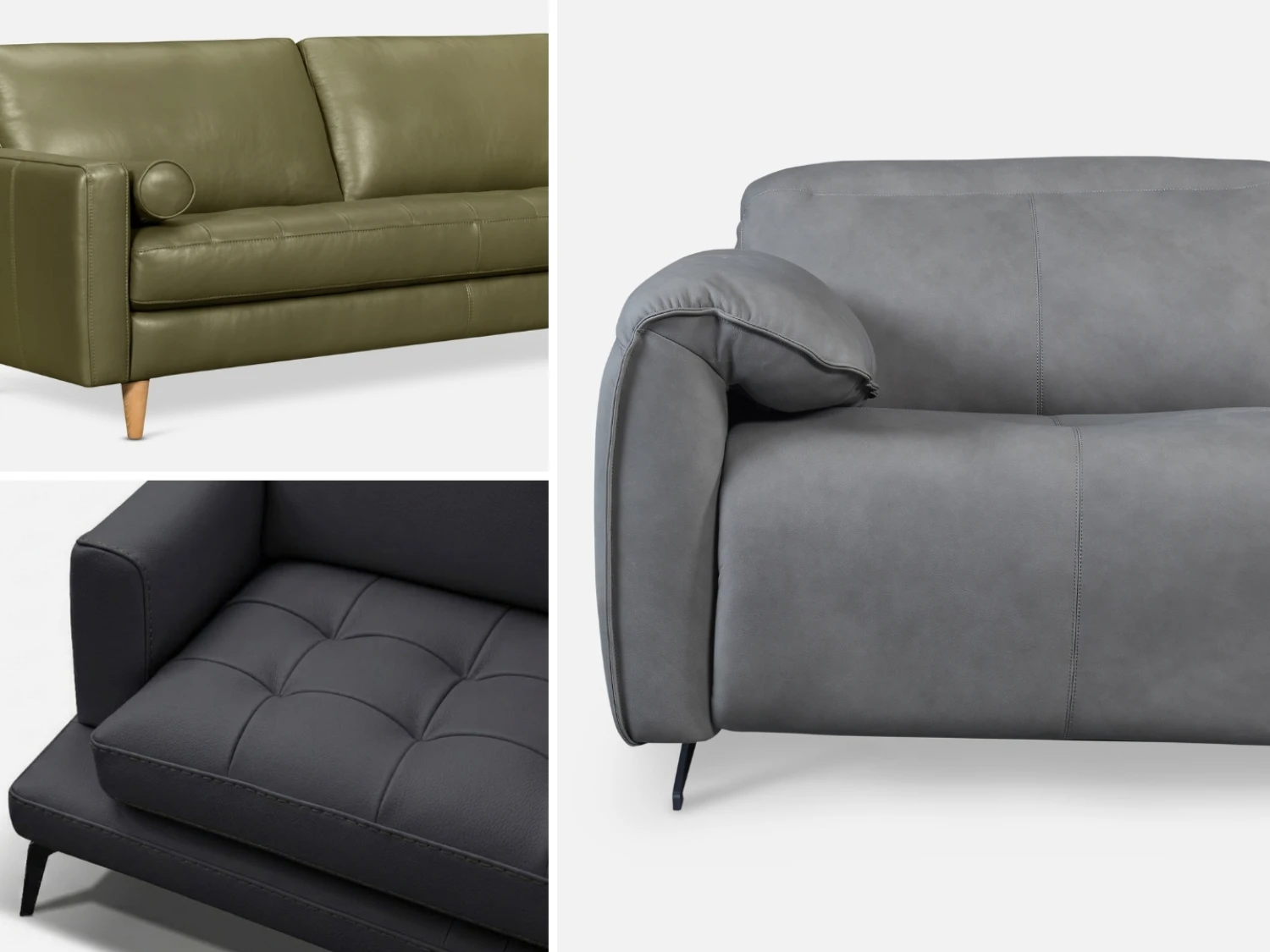
Calling everything “leather” is a little like calling every piece of timber “wood”. It may be technically accurate, but it doesn’t tell you much about how the material will look, feel or perform.
Aniline leather has very little surface coating, allowing the grain, markings and natural variation of the hide to remain visible. It is soft, tactile and full of individuality, although it appreciates a little more care than heavily protected alternatives.
Semi-aniline leather has a light protective finish, retaining much of the softness and visible character of aniline leather while offering additional resistance to daily wear.
Pigmented or protected leather has a stronger surface treatment, which creates a more consistent appearance and makes it generally more durable and straightforward to maintain, particularly on furniture that will be used regularly.
There is no universally best option, because someone looking for rich variation and a developing patina may choose very differently from someone furnishing a home shared with children, pets and frequent visitors. Simply, the best leather is the one that suits how you live.
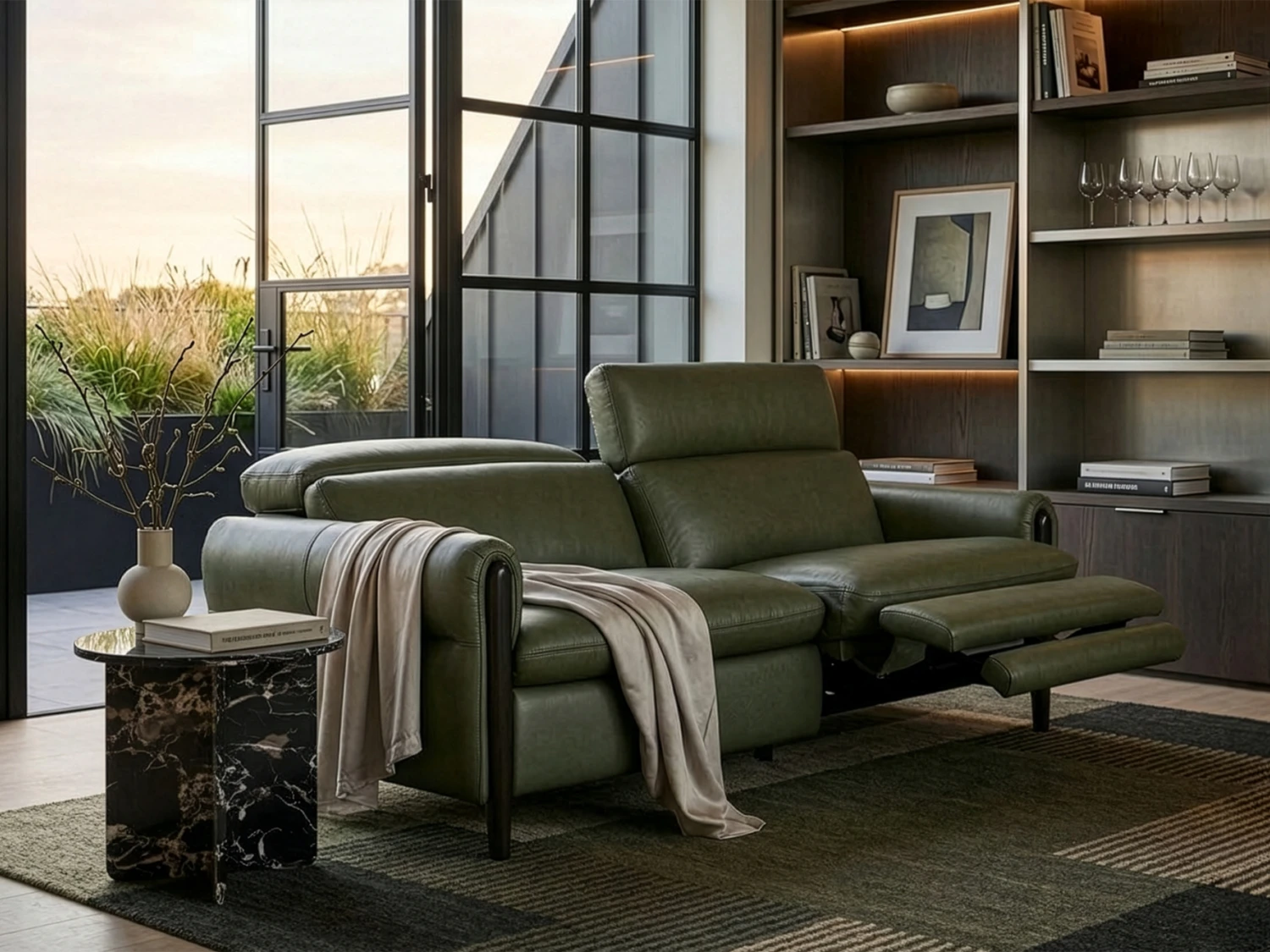
Leather itself is not dated, although certain sofa shapes may be, and we can leave those safely in the past.
A sofa’s comfort comes from its cushioning, suspension, seat depth, proportions and construction, rather than its upholstery alone. Leather may be used on a precise, architectural frame, but it can just as easily cover a deep modular sofa designed for stretching out, settling in and staying there for the foreseeable future.
Many leathers also soften through use, gradually settling and responding to the way you sit until they feel more relaxed, familiar and considerably less like somewhere you are waiting for an appointment.
On the right design, leather can feel warm, contemporary and beautifully understated, working equally well across slim sofas, generous modular lounges, dining chairs and sculptural occasional pieces. It also pairs naturally with timber, stone, wool, ceramics and heavily textured rugs, introducing warmth, contrast and depth rather than making a room feel dark, heavy or overly masculine.
Leather does not dictate the mood of a room because, ultimately, that depends on the design surrounding it.
One of leather’s strengths is that it does not always need to remain perfectly untouched, particularly when natural finishes are chosen for the very variation and individuality they bring.
Natural leather may display differences in grain, small creases, wrinkles and subtle shifts in tone, but these are not necessarily defects. Instead, they are reminders that the material began as a hide rather than rolling out of a machine, looking perfectly identical from one metre to the next.
Depending on the finish, leather may soften, deepen in colour and develop a patina as it is used, allowing the places where people sit most often to gradually record the life of the home. This does not mean every spill should be celebrated, as some marks are simply marks and some accidents still require attention, but quality leather can age with far more grace than its reputation suggests.
Some people love visible variation, while others prefer a smooth and uniform appearance, and both preferences are valid. This is why leather is best judged in person, where its texture, softness and finish can be properly appreciated, rather than through a small image on a screen.
Leather is allowed to have a little personality, as most of us do by a certain age.
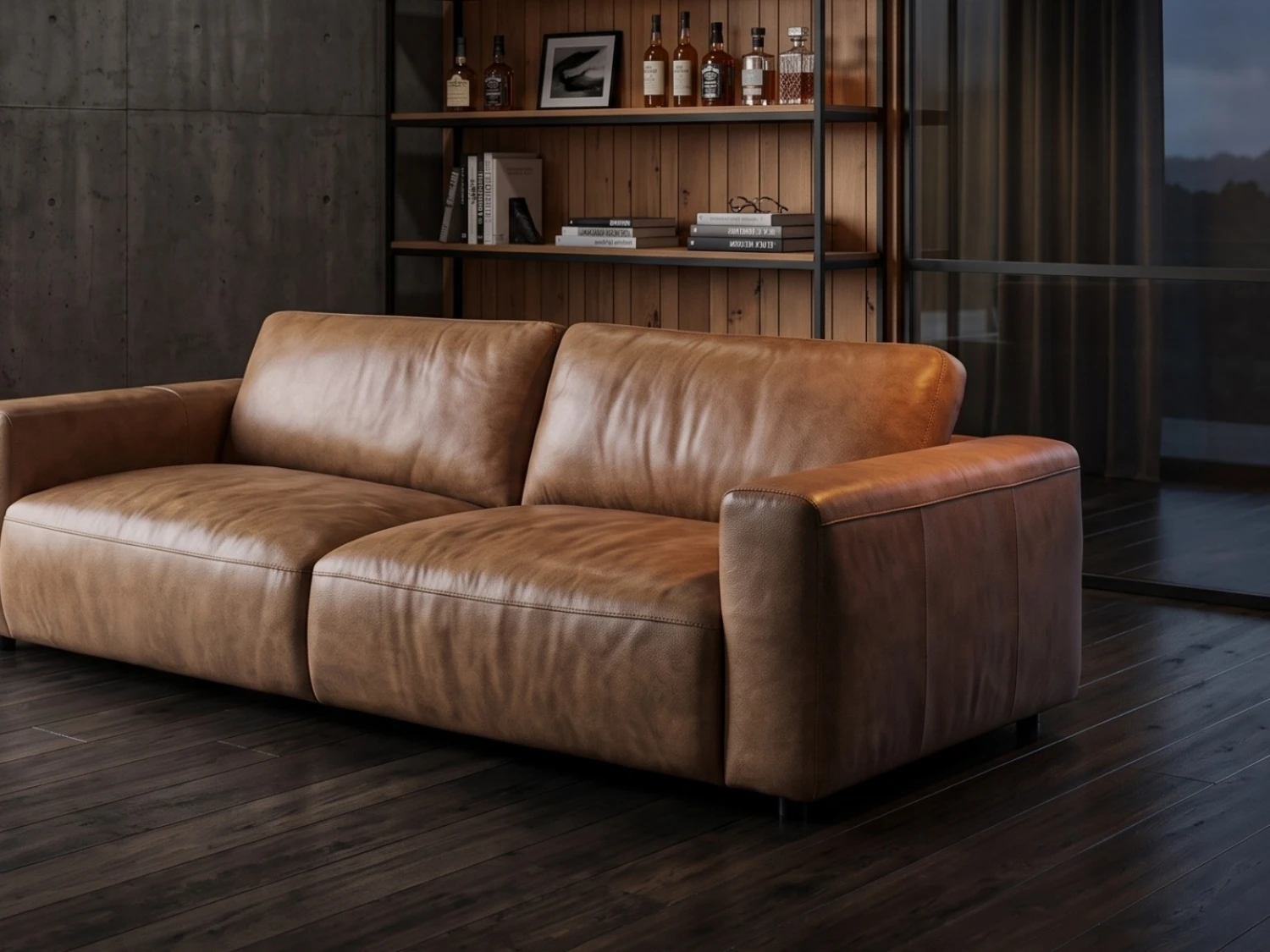
Leather is comfortable, tactile, durable and capable of ageing with genuine character, but perhaps its greatest strength is that it does not need to be admired from a safe distance. It is made to be sat on, stretched out across and lived with, gathering softness and familiarity as it becomes part of the home.
Before dismissing leather based on memories of cold lounge suites and strict no-drinks rules, it may be worth giving it another sit.
The Bradfords team can help you compare different finishes, understand how they will perform and find a leather suited to your home, your lifestyle and your preferred level of maintenance.
Some colour combinations just seem to make sense, even when they aren’t combinations we would necessarily think to put together ourselves.
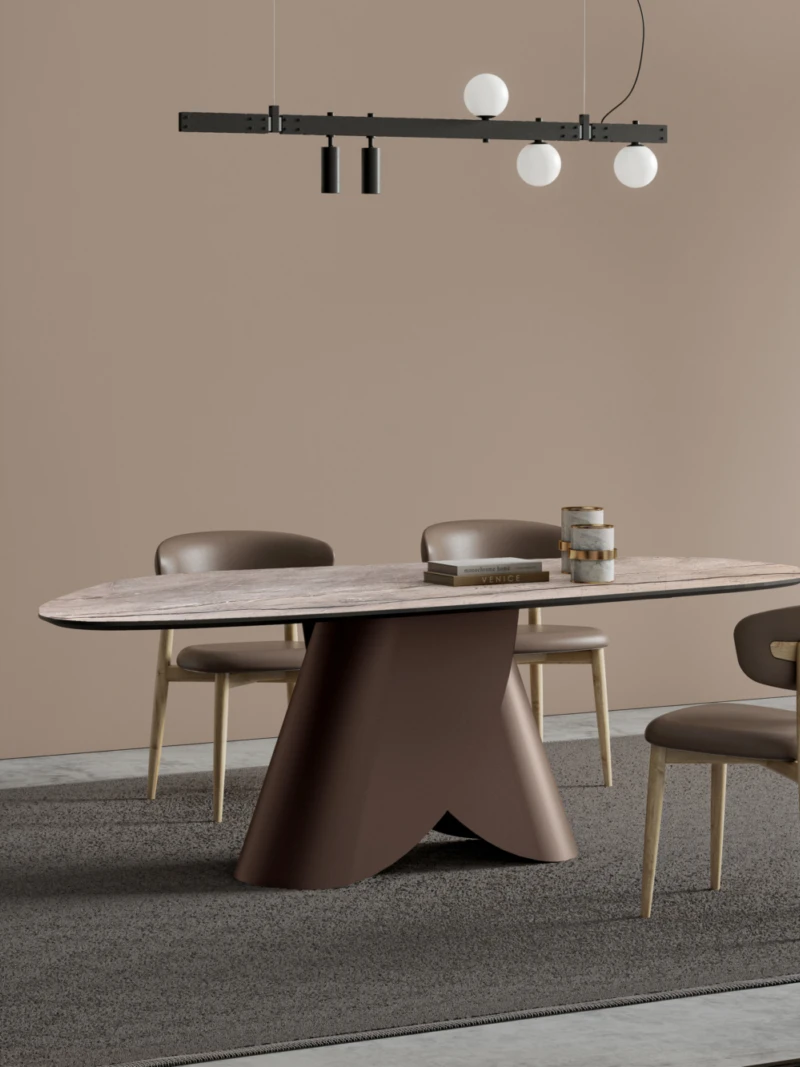
Italian design has a way of making even the most functional pieces feel considered.